
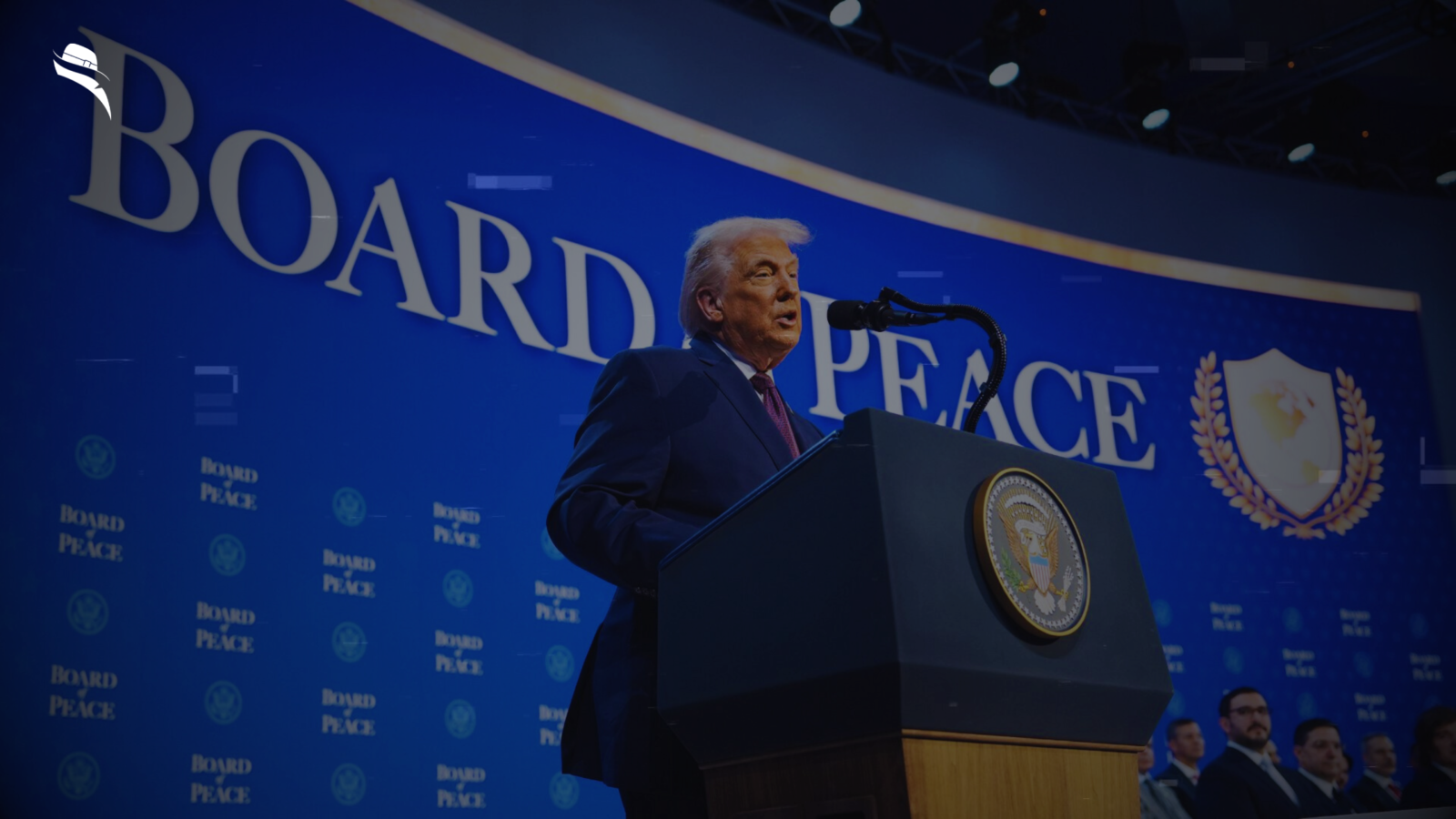

Washington — US President Donald Trump has unveiled what he described as a new “Board of Peace” intended to oversee governance in Gaza, but the initiative is already facing scrutiny over its membership and lack of Palestinian representation.
The board reportedly consists of politicians and business figures who have previously supported or been connected to policies aligned with ‘Israel’s’ military actions in the Palestinian territories. No Palestinian officials or civil representatives were named as part of the body.
Netanyahu’s Inclusion Draws Attention
‘Israeli’ Prime Minister Benjamin Netanyahu is listed among those associated with the initiative. Netanyahu has faced international legal scrutiny, including an International Criminal Court warrant related to alleged war crimes. In September 2025, he stated, “There will be no Palestinian state,” a position critics say signals opposition to Palestinian sovereignty.
Kushner’s Record on Regional Policy
Jared Kushner, Trump’s son-in-law and former senior adviser, is also linked to the effort. Kushner played a central role in previous US Middle East policies, including support for moving the US embassy to Jerusalem. He has publicly discussed economic redevelopment proposals involving Gaza, at one point suggesting relocation of residents to allow coastal development — remarks that drew backlash from Palestinian advocates.
Blair’s Role Revisited
Former UK Prime Minister Tony Blair is also mentioned in connection with the broader framework. Blair’s past Middle East involvement and his role in the US–UK invasion of Iraq have long been subjects of political and legal criticism. Opponents argue his policies historically did little to advance Palestinian statehood.
Rubio and US Policy Stance
US Secretary of State Marco Rubio has been a vocal supporter of strong US backing for ‘Israel’s’ military operations. He has opposed ceasefire initiatives in Gaza and has supported policies critics say contribute to settlement expansion and land disputes. Rubio has also taken positions against pro-Palestinian activists in the United States.
Witkoff and Ceasefire Diplomacy
US Special Envoy Steve Witkoff, involved in recent ceasefire discussions, is likewise cited. He previously remarked that “a better life (for Palestinians) is not necessarily tied to the physical space that [they] are in today,” a statement that sparked debate over displacement and long-term residency rights.
Wider Concerns
Reports suggest the broader group tied to the initiative includes figures from more than 20 countries. Human rights advocates argue that the structure sidelines Palestinian self-determination.
“None of them should be dictating the future for Palestinians. That’s up for Palestinians to decide,” a rights advocate said, reflecting concerns raised by civil society groups.
The proposal has generated international debate, with observers questioning both the board’s mandate and its implications for international law and representation.