
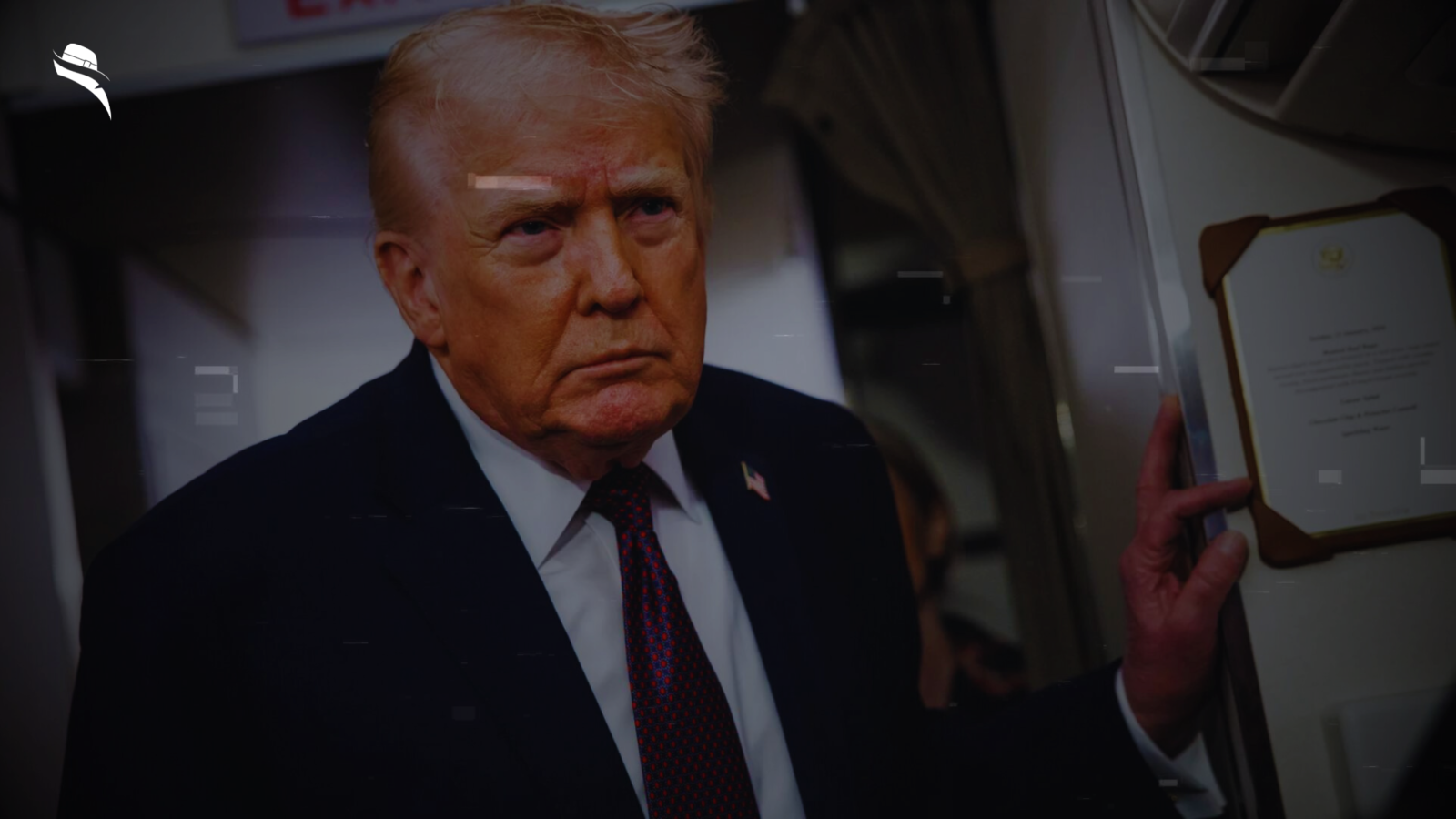

Washington / Tehran / Jerusalem — A leading ‘Israeli’ newspaper reports that the Trump administration has moved toward completing a detailed “target bank” — a list of Iranian leaders, military figures, strategic facilities, and sensitive infrastructure that could be considered if the United States orders military action against Iran, coinciding with rising regional tensions.
According to the Yisrael Hayom report, the plan follows broader shifts in US force posture in the Middle East amid escalating friction between Washington and Tehran. News outlets describe the approach as deliberate preparation rather than a public timetable, with White House messaging remaining intentionally vague about specific actions.
What the “Target Bank” Includes
The reported list identifies senior political and military figures at the heart of the Iranian system. The newspaper’s coverage cites Supreme Leader Ali Khamenei — who oversees Iran’s nuclear policy and regional militia networks — as a central figure in the planning. It also mentions several senior commanders and institutional leaders who are said to be among the potential options under consideration.
In addition to individuals, the reported plan reportedly extends to strategic and economic targets, including key government councils, internal security apparatuses, facilities tied to Iran’s energy infrastructure, and oil reserves in the Khuzestan region. Nuclear production sites — particularly the Parchin military complex — are highlighted as among the most urgent considerations.
Strategic Rationale and Military Buildup
Analysts and regional observers have noted that such targeting would aim to degrade command-and-control capabilities and limit Tehran’s ability to organize coherent retaliation. This planning reportedly coincides with an ongoing US military buildup in the Middle East, including the deployment of the USS Abraham Lincoln aircraft carrier strike group and supporting destroyers, fighter jets and air-defence systems.
President Donald Trump has publicly acknowledged a larger US military presence moving into the region — a position framed as deterrence rather than a direct warning of imminent strikes — while the United States also maintains diplomatic channels open with Tehran.
Regional and International Reactions
Tension surrounding the reported planning and forces in motion has elicited responses from multiple regional partners. Iran has warned that any attack would be treated as “all-out war,” a senior official said in recent days, underscoring Tehran’s preparedness to respond robustly to perceived aggression.
At the same time, Gulf Arab states, including Saudi Arabia, Oman, and Qatar, are reportedly urging Washington to avoid military strikes on Iran, warning such action could destabilize economies and disrupt oil flows through the Strait of Hormuz — a critical international transit route.
A Fluid Strategic Environment
While media reports highlight the existence of a target bank and heightened readiness, there is no official confirmation from the White House or the Pentagon that a final order to strike has been issued. Experts emphasize that a “target bank” — a list of potential options — is distinct from a command to launch strikes, and that military planning frequently involves preparing multiple scenarios before decisions are made at the highest levels.
The situation remains dynamic, with diplomacy, deterrence, and military planning unfolding simultaneously as tensions between the United States and Iran continue to shape broader Middle Eastern security dynamics.